

dormant account fees Key Takeaways
Dormant account fees are charges banks apply after an account shows no customer-initiated activity for 12 consecutive months.
- Banks typically define 12 months of zero transactions as the threshold for dormant account fees — this includes no deposits, withdrawals, or online logins.
- After activation, a set inactivity fee monthly deduction — often R50 to R120 per month — is automatically subtracted until the account is closed or reactivated.
- Knowing your bank’s specific 12 months dormant account charges policy and setting up a small recurring transaction can protect your money from unnecessary losses.
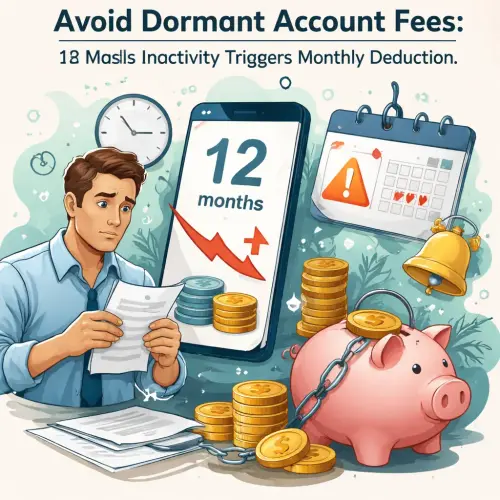
What Are Dormant Account Fees and How Do They Work?
Dormant account fees are service charges imposed by banks and credit unions when an account shows no customer-initiated activity for a specified period—commonly 12 months. The idea behind these fees is that maintaining inactive accounts still costs the bank administrative resources, such as record-keeping, statement generation, and regulatory compliance. However, for account holders, this can feel like a penalty for simply not using the account regularly. For a related guide, see Currency Options: PHP, USD, EUR, SGD, MYR – Which Saves on Exchange Fees?.
Once an account becomes dormant, the bank sends a notification (often by mail or email) to the last known address. If no activity resumes within the grace period—usually 30 to 90 days—the inactivity fee monthly deduction begins. This charge repeats every month until the account is reactivated, closed by the customer, or the balance hits zero. Some banks then turn the account over to the state as unclaimed property after a longer period, typically three to five years.
How Banks Define “Inactivity”
What counts as activity varies slightly by institution, but most include these customer-initiated events:
- Deposits (cash, cheque, electronic transfer)
- Withdrawals (ATM, over-the-counter, debit card purchase)
- Online or mobile banking login
- Bill payments or recurring debit orders
- In-branch interaction with a teller
Automatic actions such as bank fee reversals, interest credits, or system-generated statements are generally not considered customer activity. So simply earning a few cents of interest each month won’t stop the clock on dormancy.
What Happens After 12 Months of Inactivity: The Trigger and Monthly Deduction
After exactly 12 consecutive months without any of the above qualifying events, the account is classified as dormant in most banking systems. This is the moment when 12 months dormant account charges become a real risk. Here’s the typical sequence:
- Dormancy flag applied – The bank’s system marks the account inactive and removes it from standard fee waivers or promotional interest rates.
- Notification – A letter or email is sent explaining the status and warning of upcoming fees. Customers usually have 30–90 days to act before charges start.
- First deduction – If no activity occurs, a first inactivity fee monthly deduction is taken, typically between R50 and R120 depending on the bank and account type.
- Recurring charges – The fee is deducted every month thereafter. If the balance runs out, the account may be closed or sent to collections for the negative amount.
Example: How Dormant Account Fees Add Up
Consider a savings account with a balance of R600. After 12 months of inactivity, a bank charges R75 per month in dormant account fees. Here’s what happens:
- Month 1: R600 – R75 = R525
- Month 2: R525 – R75 = R450
- Month 3: R450 – R75 = R375
- Month 4: R375 – R75 = R300
- Month 5: R300 – R75 = R225
- Month 6: R225 – R75 = R150
- Month 7: R150 – R75 = R75
- Month 8: R75 – R75 = R0
After eight months, the entire balance is gone—not because of spending, but purely due to recurring inactivity fee monthly deduction charges. The bank may then close the account, and the customer loses the full amount.
Consequences of Ignoring Dormancy Notices
Failing to respond to dormancy warnings or resume activity can lead to several negative outcomes beyond lost funds:
- Balance depletion – The most immediate effect: your money disappears month by month.
- Negative balance risk – If the fee exceeds the remaining balance, some banks allow the account to go negative and pursue collection for the shortfall.
- Account closure – Many banks automatically close accounts that remain empty or dormant for an extended period (e.g., 24+ months).
- Credit score impact – While less common, unpaid fees sent to a collection agency can appear on your credit report and lower your score.
- Unclaimed property transfer – After three to five years (varies by state), the bank may escheat the balance to the government. Reclaiming it requires filing a claim and proving ownership—a time-consuming process.
How to Avoid Dormant Account Fees: Practical Tips
The good news is that avoiding dormant account fees is straightforward. Here are proven strategies, ranked from easiest to most proactive:
1. Set Up a Small Recurring Transaction
Schedule a monthly automatic transfer of R50 from your checking account to the dormant savings or investment account. This single action resets the 12-month clock at most banks because it counts as a deposit. Similarly, a recurring debit order for a low-cost service—like a streaming platform—also qualifies as activity. For a related guide, see Bonus Abuse: 1 Smart Way Gbet Detects It and Why You Lose Winnings.
2. Use Online Banking at Least Once a Quarter
Logging into your account online or via mobile app is counted as customer-initiated activity by many banks. Mark a quarterly reminder to check balances or view statements. Even a quick login every three months can prevent the dormancy trigger.
3. Consolidate or Close Unused Accounts
If you have multiple accounts that serve no current purpose, close them. Transfer any remaining funds to your primary account. This eliminates the risk entirely and simplifies your finances. Most banks allow account closure online or through a branch visit.
4. Read Your Bank’s Fee Schedule
Every bank publishes its dormancy policy in the account terms and conditions or fee booklet. Look for phrases like “inactive account fee,” “dormancy charge,” or “maintenance fee for dormant accounts.” Knowing the exact 12 months dormant account charges for your account type lets you plan accordingly.
5. Opt for No-Fee or Low-Fee Accounts
Some financial institutions offer accounts without dormancy fees—particularly online-only banks and credit unions. If you expect occasional inactivity, switching to such an account can save you money. For example, many neobanks in South Africa, such as TymeBank and Bank Zero, do not charge dormant account fees.
What to Do If You’ve Already Been Charged
If you notice an unexpected inactivity fee monthly deduction on your statement, act quickly:
- Contact customer service – Explain that you did not realise the account was dormant. Some banks waive the first fee as a goodwill gesture, especially if you resume activity immediately.
- Reactivate the account – Make a deposit, withdrawal, or online login to bring the account back to active status. This stops further charges.
- Request a fee reversal – If you have a good relationship with the bank (e.g., multiple accounts or a clean history), politely ask for the fees to be reversed. Many banks will oblige once or twice.
- Close the account if not needed – If the account no longer serves a purpose, close it after withdrawing or transferring the remaining balance. This prevents future fees.
Useful Resources
For more details on specific bank policies and consumer protection related to dormant account fees, these external sources provide authoritative guidance:
- South African Reserve Bank – Consumer Protection and Banking Services – Official guidelines on bank fees, account management, and how to file a complaint about unfair charges.
- BusinessTech – Banks That Charge Dormant Account Fees in South Africa – A current overview of which major South African banks impose inactivity fees and typical amounts.
Frequently Asked Questions About dormant account fees
What exactly are dormant account fees ?
Dormant account fees are monthly charges levied by banks on accounts that show no customer-initiated activity for a defined period, typically 12 months. The fee is intended to cover administrative costs of maintaining inactive accounts.
How long until my account is considered dormant?
Most banks consider an account dormant after 12 consecutive months without any qualifying activity, such as deposits, withdrawals, online logins, or debit card transactions. Some institutions may use a 24-month window for certain account types.
Do all banks charge dormant account fees ?
No, not all banks charge them. Many traditional brick-and-mortar banks do, while some online-only banks, credit unions, and neobanks have eliminated dormant account fees entirely. Always check the fee schedule before opening an account.
How much is the inactivity fee monthly deduction ?
The inactivity fee monthly deduction varies by institution. In South Africa, amounts typically range from R50 to R120 per month. Other countries may see fees from $2 to $15 per month depending on the bank and account type. For a related guide, see Withdrawal Processing Times: 24h E-Wallet vs 3–5 Day Bank Wire – Which Is Faster?.
Can the bank take my entire balance in dormant account fees ?
Yes, if the monthly fee continues and no activity resumes, the bank can deduct the 12 months dormant account charges until the balance reaches zero. Some banks then close the account or attempt to collect any resulting negative balance.
Will the bank notify me before charging dormant account fees ?
Most banks are required by regulation to send a notice—often by mail or email—to the account holder at least 30 days before the first fee is deducted. However, if your contact details are outdated, you may not receive the warning.
What counts as “activity” to prevent dormancy?
Qualifying activities typically include making a deposit or withdrawal, using a debit card, logging into online or mobile banking, paying a bill, or visiting a branch. Simply viewing a statement online may or may not count—confirm with your bank.
Does earning interest prevent dormant account fees ?
No, automatic interest credits are generally not considered customer-initiated activity. You still need to perform a manual transaction or login to reset the 12-month dormancy clock.
Can I get dormant account fees refunded?
Possibly—especially if this is your first occurrence. Contact customer service, explain the situation, and request a goodwill reversal. Many banks will refund the fee once or twice if you reactivate the account immediately.
What happens if my account balance goes negative from inactivity fees?
Some banks allow the balance to go negative and may send the debt to a collection agency. This can affect your credit score. It’s best to close the account or cover the shortfall to avoid collections.
Are dormant account fees legal?
Yes, as long as the fee is disclosed in the account terms and conditions and complies with local consumer protection laws. In South Africa, the National Credit Act and banking codes require clear disclosure of all fees.
How do I close a dormant account without paying fees?
Contact the bank directly and request closure. If the account has a balance, ask for a transfer or cheque. Some banks may waive the final month’s inactivity fee monthly deduction if you close proactively.
What is the difference between dormant and inactive accounts?
“Inactive” usually refers to accounts with no activity for a shorter period (e.g., 6–12 months), while “dormant” means the full dormancy threshold has been crossed, triggering fees. Different banks use the terms differently.
Do joint accounts have the same dormancy rules?
Yes, joint accounts are subject to the same dormant account fees policies. Activity by any account holder counts, but if neither party uses the account for 12 months, the dormancy clock runs.
Can a minor’s savings account be charged dormancy fees?
Some banks exempt minor or student accounts from dormancy fees, but not all. Check the specific account terms. If the account is held by a parent as guardian, the inactivity of either party may trigger fees.
How do I avoid dormant account fees if I travel long-term?
Set up a recurring transfer from another account, authorise a trusted person as a joint holder, or use a bank that does not charge dormant account fees. Many expats use online banks with no dormancy fees.
What happens to my money if the account is closed due to dormancy?
If fees drain the balance to zero, the account is closed with no remaining funds. If a positive balance remains after closure (rare), the bank may send it to the state as unclaimed property after a statutory period.
Do credit cards have dormant account fees ?
No, the term “dormant account fees” mainly applies to checking, savings, and investment accounts. Credit cards may have inactivity fees or account closure fees, but different rules apply. Check your credit card terms separately.
How can I find my bank’s specific 12 months dormant account charges ?
Review your account’s fee schedule, often available on the bank’s website under “Tariffs” or “Fees.” You can also call customer service or visit a branch and ask for a full list of 12 months dormant account charges.
Should I close an unused account to avoid dormancy fees?
Yes, if you have no plans to use it. Closing the account eliminates the risk of future fees and simplifies your finances. Just ensure any remaining balance is withdrawn or transferred first.