

nudge to get help Key Takeaways
Open your messaging app and send a short text to one trusted person: "Hey, I’m going through a rough patch.
- A gentle nudge to get help — like texting a friend or booking a 15-minute call — is often all you need to overcome the initial resistance.
- Asking for help is a skill you can practice. Start with low-stakes requests to build confidence.
- Small actions create momentum. One small step today can lead to real relief and stronger relationships.
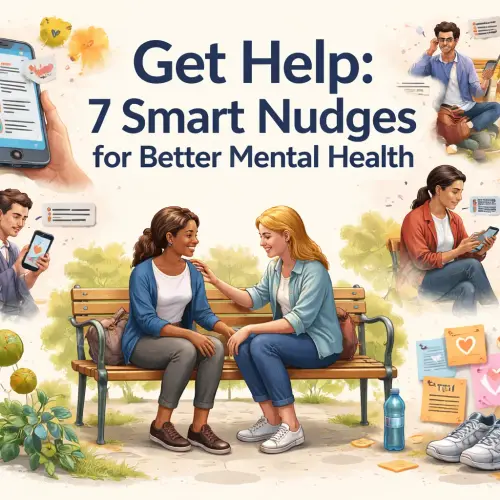
Why You Hesitate to Ask for Help — and How a Simple Nudge Changes Everything
Picture this: You’re staring at your phone, thumb hovering over a therapist’s number. You’ve felt off for weeks — irritable, tired, disconnected — but something stops you. Maybe you think, “I should be able to handle this.” Maybe you worry about being a burden. Maybe you just don’t know what to say.
That moment of hesitation is more common than you think. Research from the American Psychological Association shows that people consistently underestimate how willing others are to offer support. We overestimate the cost of asking and underestimate the relief it brings. A small nudge to get help — a reminder, a script, a tiny action — can short-circuit that hesitation and get you moving.
7 Gentle Nudges to Get Help — Starting Right Now
These seven strategies are designed to reduce friction. You don’t need to be brave or ready. You just need to take one tiny step.
1. The Two-Sentence Text
Open your messaging app and send a short text to one trusted person: “Hey, I’m going through a rough patch. Can we talk later this week?” You don’t need to explain everything. You don’t need to be eloquent. Two sentences are enough. This tiny nudge to get help puts the request outside your head and into the world.
2. The 5-Minute Rule
Set a timer for five minutes. In that time, do just one thing: look up a therapist directory, save a helpline number, or open a scheduling page. When the timer rings, you can stop. More often than not, you’ll keep going because the hardest part — starting — is behind you. For a related guide, see 4 Reality Checks – The Pop-Up That Saves Your Budget.
3. Use a Script
Hesitation often comes from not knowing what to say. Keep a simple script ready: “I’ve been feeling [emotion], and I think talking to someone could help. Can you help me find a counselor?” Practice it once, out loud. Now it’s easier to say when the moment comes. For a related guide, see Deposit Limits: 5 Smart Ways to Protect Your Wallet.
4. The Accountability Partner Nudge
Ask a friend to check in with you by a specific date: “Can you ask me on Friday if I’ve called the clinic yet?” This turns your intention into a shared commitment. The external prompt becomes your nudge to get help when your own motivation wavers.
5. Lower the Bar with a Free or Anonymous Option
Call a crisis line or use a free text-based support service. These require no insurance, no appointment, and no name. The anonymity reduces the fear of judgment. Once you’ve made that first contact, professional help feels less intimidating.
6. The “Help for Someone Else” Trick
Frame your research as if you’re helping a friend. Search for “therapists near me for anxiety” or “support groups for depression” as if you’re gathering info for a loved one. It distances the emotional weight. Often, you’ll realize the information applies perfectly to you.
7. Schedule One Tiny, Non-Binding Step
Book a 15-minute “get to know you” call with a therapist. Most offer free consultations. There’s no commitment to continue. This low-pressure nudge to get help
How to Overcome the Most Common Hesitations
Even with nudges, doubts can creep in. Let’s address the three biggest ones.
“I Don’t Want to Burden Anyone”
Study after study shows that people feel honored when you ask for help. Your friends want to be there for you. By asking, you give them the chance to show they care. It strengthens your bond.
“I Should Be Able to Handle This Alone”
Self-reliance is a strength, but not when it isolates you. The strongest people know when to lean on others. Asking for help tips from experts consistently highlight that seeking support is a sign of wisdom, not weakness.
“What If It Doesn’t Work?”
Not every therapist, friend, or strategy will be the right fit. That’s okay. Each attempt teaches you something. The only true failure is staying stuck. One nudge to get help that doesn’t click simply means you try the next one.
Small Nudges, Big Results: What to Expect
Once you take that first step, you’ll likely notice a few things:
- Immediate relief — The secret is out, and the burden feels lighter.
- Better perspective — Talking to someone helps you see your situation more clearly.
- Stronger connections — Vulnerability deepens relationships. People respect your honesty.
- More momentum — Small wins build confidence. After one call, the next is easier.
A 2022 study in the Journal of Experimental Social Psychology found that people who asked for help reported feeling more competent and connected afterward — exactly the opposite of what they feared. The data backs up what your gut knows: reaching out works.
Useful Resources
- MentalHealth.gov Get Help — Official U.S. government directory of crisis lines, treatment locators, and support groups.
- NAMI HelpLine — National Alliance on Mental Illness offers free, confidential support and resource referrals.
Frequently Asked Questions About nudge to get help
What exactly is a nudge to get help ?
A nudge to get help is a small, low-effort action designed to reduce hesitation and make reaching out feel easier. Examples include sending a short text or making a 5-minute call.
Can a nudge really make a difference for mental health?
Yes. Small actions lower the barrier to entry, build momentum, and can lead to significant relief. Behavioral science shows that reducing friction increases follow-through.
What is the biggest barrier to asking for help?
Fear of judgment and the belief that you should handle things alone are the most common barriers. These are normal but can be overcome with practice.
What are the best asking for help tips for someone with anxiety?
Start small. Use a script, text instead of calling, and choose anonymous options if needed. Each small success builds confidence.
How do I overcome hesitation to ask for help when I’m embarrassed?
Remind yourself that everyone struggles. Your worth is not diminished by needing support. A nudge to get help — like a short email — can feel safer than a face-to-face conversation.
What if I don’t know the right words to use?
Use a simple script: “I’m struggling and could use some support. Can you help me figure out where to start?” That’s enough.
How do I nudge a friend to get help?
Share a resource like a helpline number. Say, “I’m here when you’re ready.” Offer to go with them to a first appointment. Your gentle support can be their nudge to get help.
Can asking for help hurt my relationships?
No — it usually strengthens them. People feel trusted and valued when you open up. Healthy relationships include mutual support.
What is the best time of day to use a nudge to get help ?
Whenever you feel the most motivated or least anxious. Morning hours often give you more energy for uncomfortable tasks.
How many times should I try before giving up?
There is no limit. Keep trying different approaches and people until you find the support that works. Each attempt is progress.
What if the person I ask doesn’t respond well?
That reflects their limitations, not your worth. Try someone else. You deserve support, and many people will be glad to offer it.
Is it okay to ask for help more than once?
Yes. Support is not a one-time transaction. Ongoing needs deserve ongoing care. Your relationships can handle multiple requests.
Can I use a nudge to get help anonymously?
Absolutely. Crisis text lines, online forums, and anonymous hotlines let you ask for support without revealing your identity.
What if I’m afraid of being vulnerable?
Vulnerability is a strength. It takes courage to be open. Start with a small nudge — a message, a call — and let the trust grow naturally.
How do I know I need professional help?
If your emotions interfere with daily life, sleep, work, or relationships for more than two weeks, professional support can help. A nudge to get help now can prevent things from worsening.
What is the difference between a nudge and a demand?
A nudge is gentle and optional. It invites action without pressure. A demand feels forceful and can increase resistance. Nudges work better for sensitive topics like mental health.
Can I create my own nudge to get help ?
Yes. Think of one tiny action you can take in the next 5 minutes — send a text, bookmark a website, write a sentence. That’s your personal nudge.
How long does it take to feel better after asking for help?
Many people feel immediate relief from simply sharing. Deeper changes may take weeks of consistent support. The first nudge is the most important one.
What if I’ve never asked for help before?
Start with the smallest nudge possible: send a one-line message to a friend. You don’t need to be perfect. You just need to start.
Is it worth it to keep trying if past attempts didn’t work?
Yes. Different people, different approaches, and different timing can make a big difference. Your next nudge to get help could be the one that clicks.